Product Design
ClickNurse - Onboarding Redesign
ClickNurse - Onboarding Redesign
How I optimized the Time-to-Value reducing registration friction on ClickNurse

Role
Role
UX Design
UX Design
Timeline
Timeline
2025
2025
Industry
Industry
Health & Marketplace
Context, Conflict, and Objective
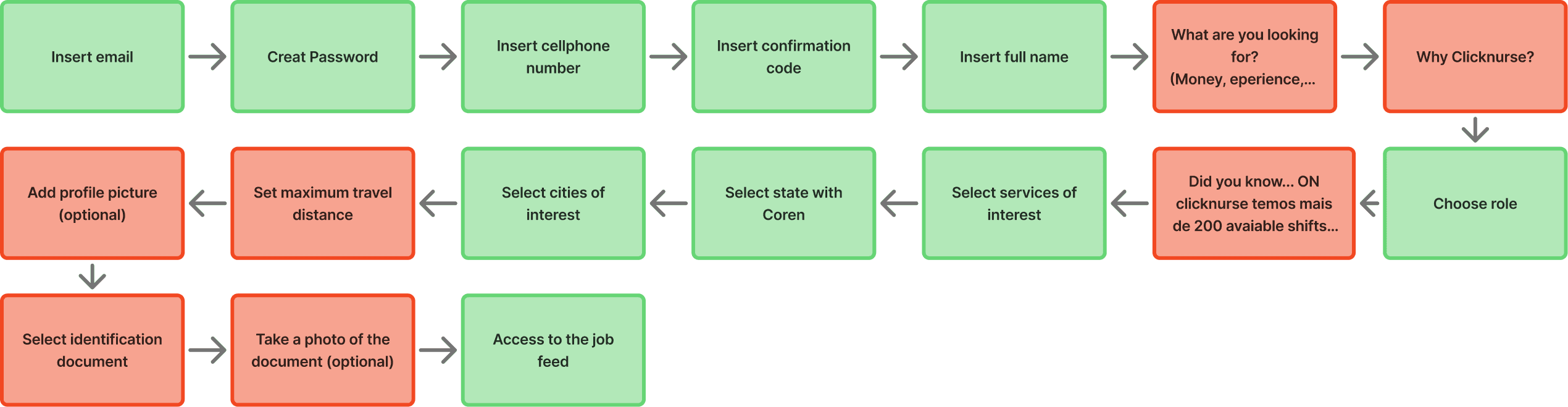
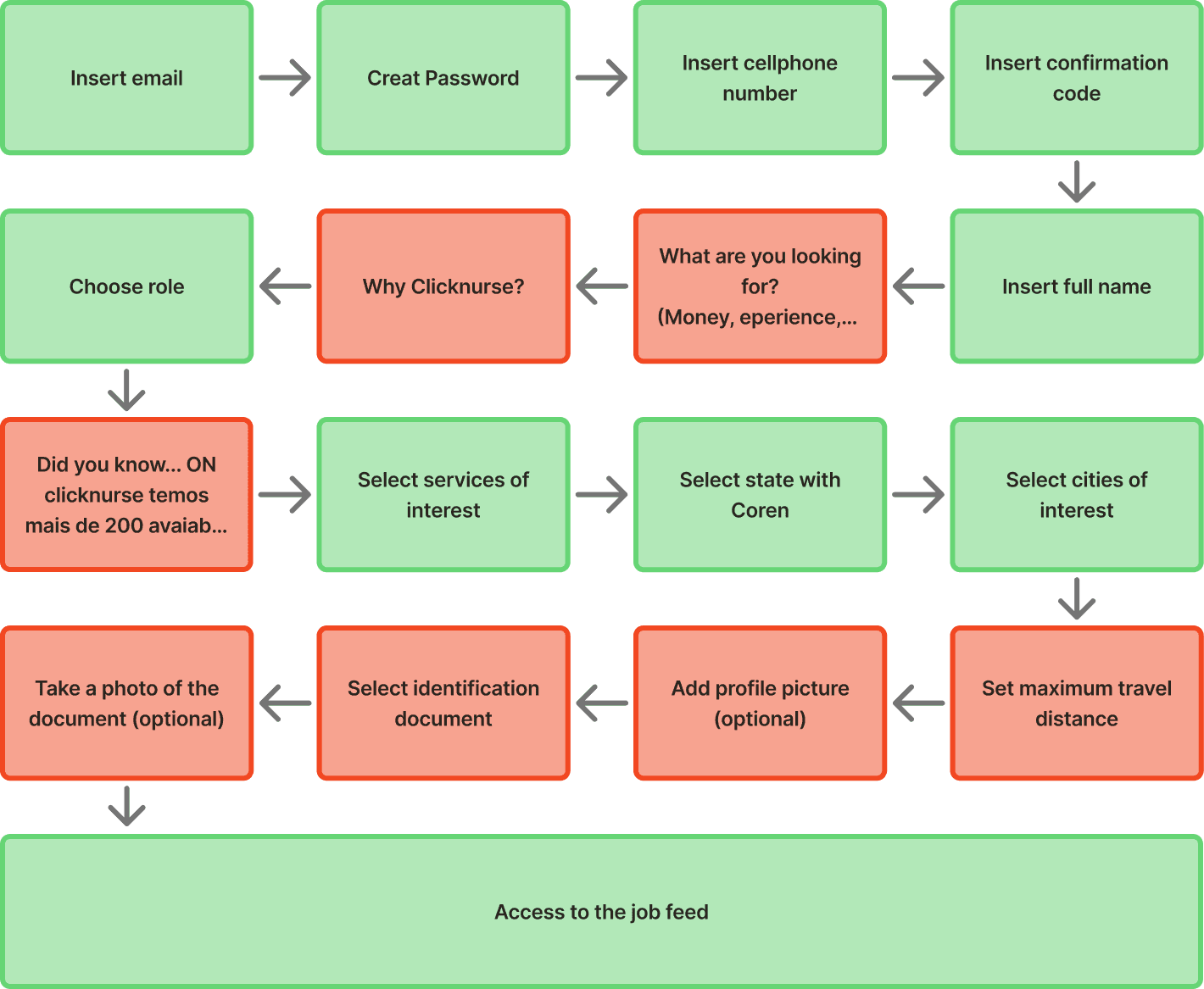
The scenario consists of a marketplace that offers 'freelancer' vacancies for professionals in the nursing field in health units. The central conflict was the high number of dropouts during registration, which had 15 distinct screens of data filling and sending of documents. The strategic objective was to maximize the entry of users until the feed of vacancies, with this there is a greater possibility of users completing the registration.
Old Onboarding
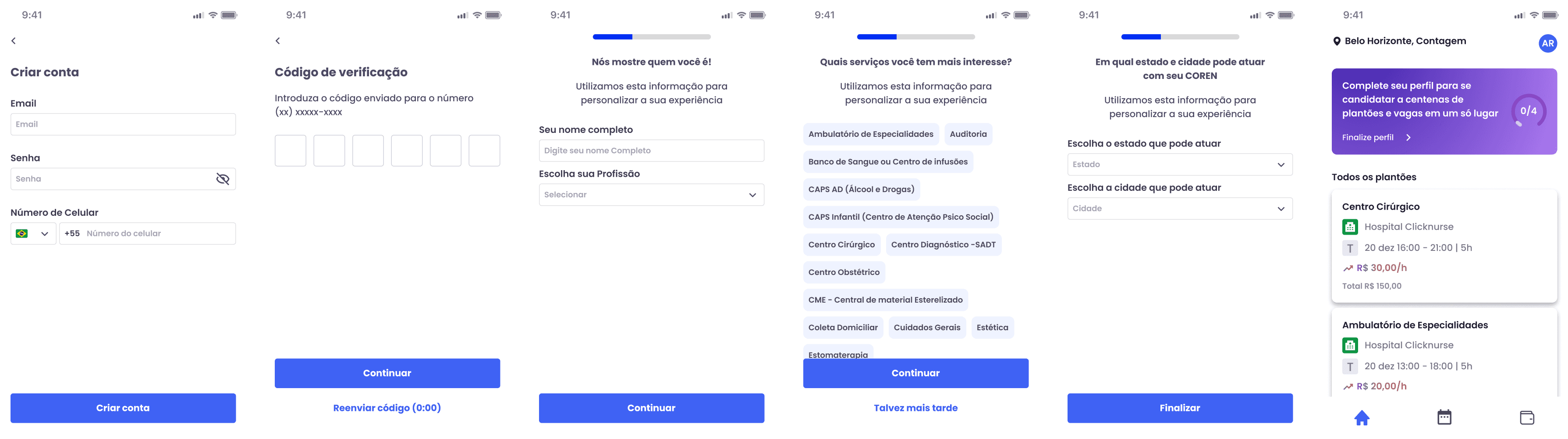
Reworked Onboarding

Solution
Solution
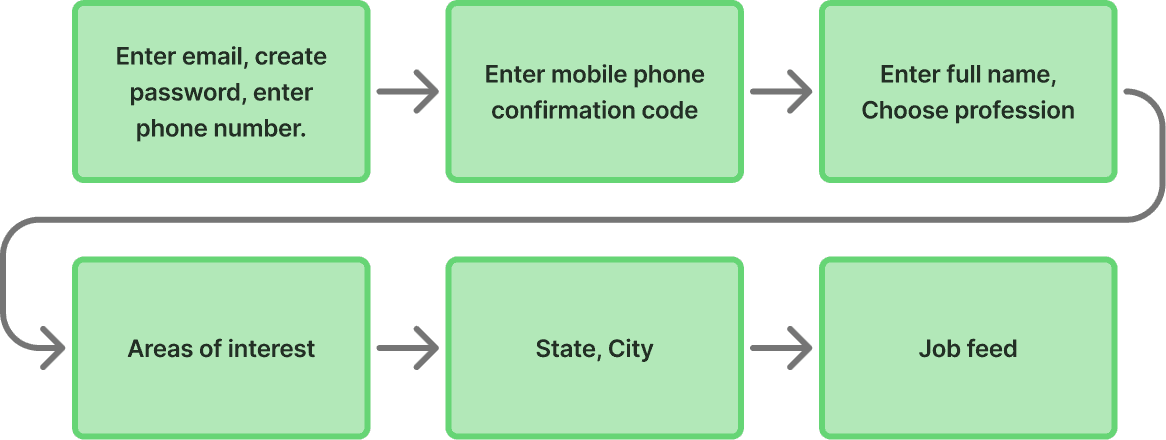
I opted to implement a funnel inversion that reduced the registration from 15 to 5 screens, eliminating the excess of documents at the entry. When prioritizing the faster access to the feed, I used the potential of financial gain as a trigger. Now, the user completes the profile not to have access to the feed of vacancies, but to apply for a vacancy that he found interesting, making it so that at this moment it is necessary for him to complete the profile with the necessary and required documents by the platform.
I opted for a funnel inversion that reduced the registration from 15 to 5 screens, eliminating the excess of documents at the entry. When prioritizing the faster access to the feed, I used the potential of financial gain as a trigger. Now, the user completes the profile not to have access to the feed of vacancies, but to apply for a vacancy that he found interesting, making it so that at this moment it is necessary for him to complete the profile with the necessary and required documents by the platform.
Trade-off
The decision generated a direct conflict between accelerated acquisition and data quality. When removing the rigid verification in the registration, the platform becomes vulnerable to the creation of false profiles and bots, facilitating the contamination of the user base.
Decision and Evidence
The central decision was to reject a gamification solution proposed by the company, and focus on a progressive onboarding. Focusing on taking the user fast to the feed of vacancies, instead of requiring an extensive registration before showing any opportunity of vacancy to this user.
This choice came from the analysis of the competitor Incredible Health, which uses long flows focusing on permanent vacancies. For the freelancer model of ClickNurse, it is necessary to understand that beeing an agile marketplace we nees a faster way of users entering the plataform, just like Uber, Upwork and other plataforms that focus in that kind of market.
When decreasing the bureaucracy, completing the filling of the profile starts to be easier and faster, and increases the chances of the user sending his data and documents if he finds an opportunity that he considers interesting.
Final Analysis
My next strategic decision would be to conduct a Comparative Discovery.
People who abandoned: Understand if the obstacle really is motivational, or if there are other reasons, for example, the user starting to do the filling of this registration and abandoning for being performing another activity for being a rushed routine. Then try to understand what could motivate or help these users to conclude the registration.
People who concluded: Identify which trigger was the 'turning point' for them to accept to conclude the registration.
Trade-off
The Solution:
A Motivation-Driven Journey
The decision generated a direct conflict between accelerated acquisition and data quality. When removing the rigid verification in the registration, the platform becomes vulnerable to the creation of false profiles and bots, facilitating the contamination of the user base.
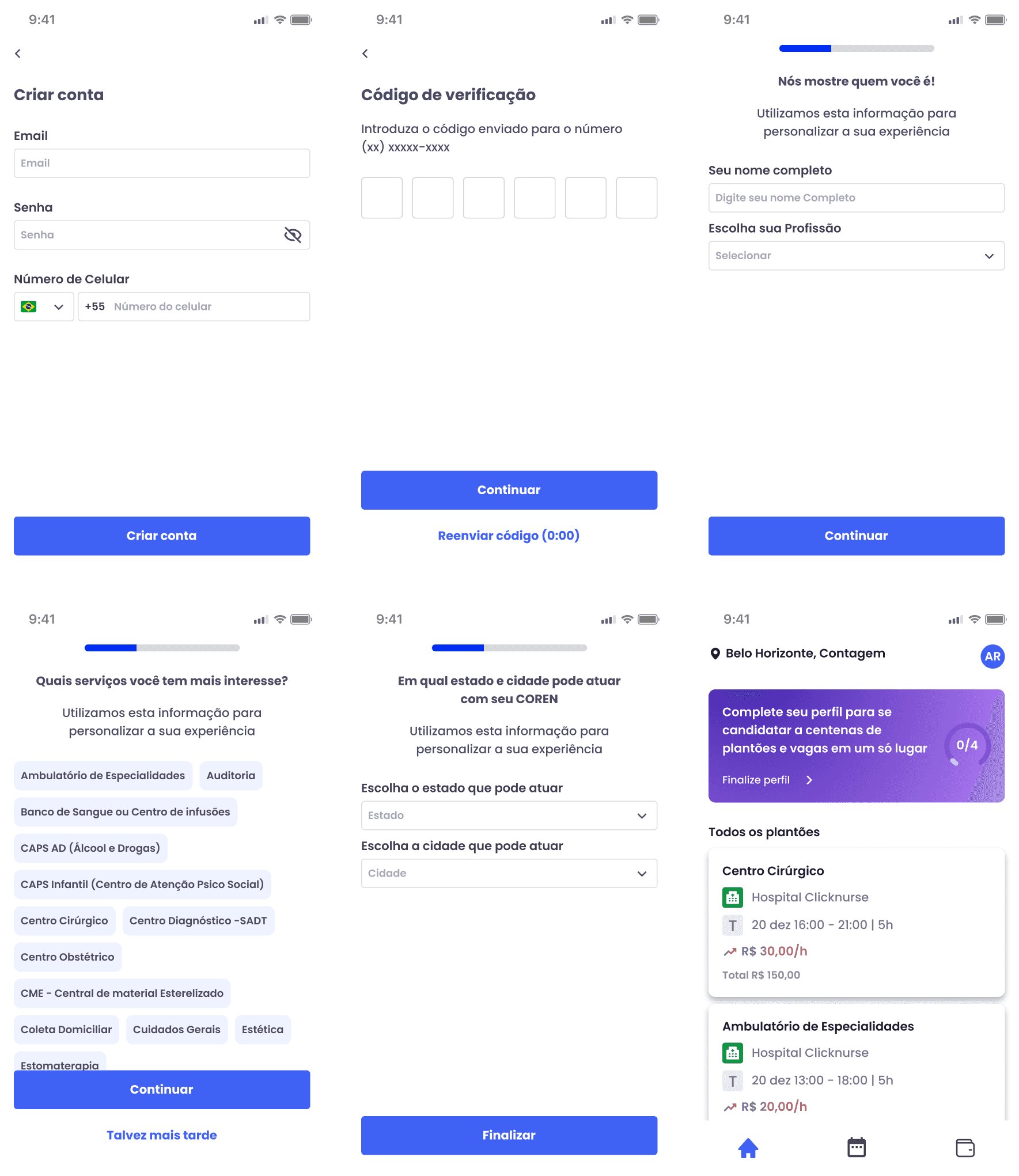
We inverted the traditional funnel, designing a 5-step journey where each screen applies a specific behavioral principle to guide the user toward a powerful "Aha! Moment".
Create Account: Applied Choice Architecture by grouping only the three essential fields (email, password, phone) to minimize initial cognitive load and kickstart progress.
SMS Verification: Framed as a Safety & Security trigger, this necessary step builds trust, a foundation for later commitment.
Minimum Profile: Used the Principle of Least Effort, collecting only name and profession—just enough to create initial personalization and hint at future relevance.
Areas of Interest (Optional): Introduced User Control & Autonomy with a "Maybe later" option. This respects the user's pace, prevents choice paralysis (Hick's Law), and makes the platform feel accommodating, not demanding.
Location: A final, simple manual input granting Personal Agency, allowing users to search where they want, not where they are.
The user is immediately delivered to the live job feed. This is the engineered "Aha! Moment" and the key psychological trigger. Seeing real, high-paying opportunities in their area converts abstract promise into concrete reward, generating a strong intrinsic motivation to return and complete their full profile.
Decision and Evidence
Behavioral Design
Principles Applied
The central decision was to reject a gamification solution proposed by the company, and focus on a progressive onboarding. Focusing on taking the user fast to the feed of vacancies, instead of requiring an extensive registration before showing any opportunity of vacancy to this user.
This choice came from the analysis of the competitor Incredible Health, which uses long flows focusing on permanent vacancies. For the freelancer model of ClickNurse, it is necessary to understand that beeing an agile marketplace we nees a faster way of users entering the plataform, just like Uber, Upwork and other plataforms that focus in that kind of market.
When decreasing the bureaucracy, completing the filling of the profile starts to be easier and faster, and increases the chances of the user sending his data and documents if he finds an opportunity that he considers interesting.
Intrinsic Motivation Engine: The job feed as an immediate reward creates the desire to engage further.
Cognitive Load Minimization: Radical simplification of initial choices and information.
Progressive Disclosure: Information is requested contextually, only when it benefits the user's journey.
User Autonomy: Strategic "opt-out" points return control to the user, reducing friction and building trust.
Final Analysis
Behavioral Design
Principles Applied
My next strategic decision would be to conduct a Comparative Discovery.
People who abandoned: Understand if the obstacle really is motivational, or if there are other reasons, for example, the user starting to do the filling of this registration and abandoning for being performing another activity for being a rushed routine. Then try to understand what could motivate or help these users to conclude the registration.
People who concluded: Identify which trigger was the 'turning point' for them to accept to conclude the registration.
Intrinsic Motivation Engine: The job feed as an immediate reward creates the desire to engage further.
Cognitive Load Minimization: Radical simplification of initial choices and information.
Progressive Disclosure: Information is requested contextually, only when it benefits the user's journey.
User Autonomy: Strategic "opt-out" points return control to the user, reducing friction and building trust.

